HKC Kidney & Transplant
Specialist care for all aspects of kidney disease, from early-stage CKD to complex transplant management — including access to the most advanced molecular diagnostics available.
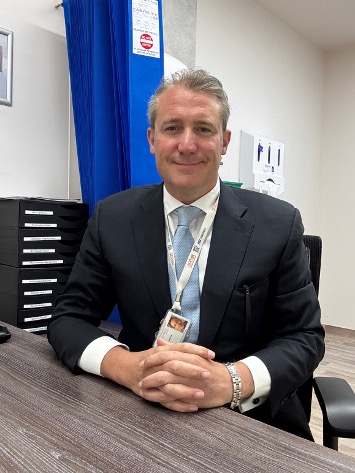
I am a consultant general physician and nephrologist specialising in the treatment of patients with medical kidney problems. I see patients from all over the UK with a wide spectrum of disorders — from abnormalities in urine or blood tests to complex multi-system illnesses such as vasculitis.
I treat patients with all stages of chronic kidney disease, acute kidney injury, and kidney transplants. General medical conditions I treat include hypertension, gout, and obesity.
I studied medicine at St Mary's Hospital Medical School (now part of Imperial College, London), qualifying in 2001. I subsequently trained at St Mary's Hospital, The Royal Brompton Hospital and Chelsea & Westminster Hospital before joining the North Thames Nephrology specialist registrar rotation.
I undertook research in transplant immunology at Imperial College (Hammersmith Hospital) and was awarded a Doctorate in Immunology in 2014. During training I also gained a Master's degree in Law. I was appointed Consultant Nephrologist with a specialist interest in transplantation in East & North Hertfordshire in 2012, and in 2016 was appointed Honorary Consultant Nephrologist at Addenbrooke's Hospital, Cambridge.
In 2020 I left NHS work to focus on private practice and on advancing non-invasive diagnostic testing in kidney disease — work that now encompasses molecular diagnostics, digital health, and patient education.
In addition to clinical work I co-supervised a PhD student at the University of Hertfordshire and have presented research at national and international conferences including the American Society of Nephrology and the American Transplant Congress.
Kidney transplantation is one of medicine's most demanding specialisms. Managing a transplanted kidney requires vigilance, experience, and increasingly — access to the very latest diagnostic technologies. Dr Lawrence combines decades of transplant experience with molecular tools that were unavailable to most patients only a few years ago.
When a transplanted kidney is under immunological attack, it sheds tiny fragments of donor DNA into the bloodstream. Measuring this donor-derived cell-free DNA — from a simple blood test — provides an early, accurate signal of rejection or injury, often before conventional markers change.
This approach is transforming transplant monitoring: it can detect subclinical rejection earlier, guide immunosuppression decisions, and reduce unnecessary biopsies — all from a blood draw rather than an invasive procedure.
When a biopsy is needed, the Molecular Microscope Diagnostic System (MMDx) goes far beyond conventional histology. Developed by the Halloran group in Edmonton, it analyses gene expression across thousands of genes in the biopsy tissue, producing a precise molecular diagnosis of what is happening in the kidney at a cellular level.
MMDx can distinguish T-cell mediated rejection, antibody-mediated rejection, borderline injury, and other conditions with a precision conventional microscopy alone cannot match — leading to more targeted treatment decisions.
A full-spectrum nephrology service, from early detection to complex disease management.
Free tools to help you understand and manage your kidney health.
Calculate your eGFR, check your CKD stage, assess your 5-year kidney failure risk, and track trends over time. Built on KDIGO 2024 and NICE NG203 guidelines.
Open Kidney CheckerA secure, private space to log symptoms, track medications, store test results, and share a curated health summary with your clinical team — between appointments.
Learn MoreDr Lawrence's personally selected monitoring equipment — blood pressure monitors, urine test strips, and body composition scales — available on Amazon.
View the StoreClear explanations of the conditions, tests, and treatments you are most likely to encounter as a kidney patient.
eGFR stands for estimated Glomerular Filtration Rate — it is a measure of how well your kidneys are filtering waste from the blood. It is calculated from a simple blood test (serum creatinine) alongside your age and sex.
A normal eGFR is above 90 mL/min/1.73m². Chronic Kidney Disease (CKD) is classified into stages based on how low this number has fallen:
The stage alone does not tell the whole story. The trend over time and the level of protein in your urine (albumin-to-creatinine ratio, or ACR) are equally important in understanding your risk and guiding your care.
Healthy kidneys filter the blood but keep protein inside the body. When protein appears in the urine — called proteinuria — it suggests the kidney's filter is not working as it should.
The most important protein to measure is albumin, measured as the albumin-to-creatinine ratio (ACR) in a urine sample. A raised ACR — called albuminuria — is an independent marker of kidney risk and cardiovascular risk, even at very low levels.
Causes include diabetes, high blood pressure, glomerulonephritis (inflammation of the kidney filter), and many other conditions. The cause matters — and finding it early opens the door to treatment that can significantly slow progression.
A kidney transplant replaces the function of failed kidneys with a donor organ, placed in the lower abdomen (the original kidneys are usually left in place). Transplanted kidneys can function for many years — but require careful, lifelong monitoring and immunosuppression (medication to prevent rejection).
Monitoring typically involves regular blood tests (creatinine, tacrolimus levels), urine protein measurements, blood pressure checks, and periodic ultrasound scans. When problems are detected, a biopsy may be needed to identify the cause precisely.
Dr Lawrence also offers access to advanced molecular monitoring — see the Advanced Transplant Diagnostics section for more information on cfDNA and MMDx.
The relationship between hypertension and kidney disease runs in both directions. High blood pressure is one of the most common causes of CKD; and CKD itself raises blood pressure as the kidneys' ability to regulate salt and fluid balance deteriorates. This creates a cycle that requires careful management.
Blood pressure targets are lower in kidney disease than in the general population — particularly when proteinuria is present. Medications called ACE inhibitors or ARBs are often preferred because they both lower blood pressure and reduce protein leak, offering dual kidney protection.
A first appointment typically lasts 45–60 minutes. Dr Lawrence will want to review your full medical history, any previous blood and urine tests, imaging, and medications. It is helpful to bring:
The consultation will usually conclude with a clear explanation of the findings, a formulated diagnosis or differential, and a management plan — including any additional tests needed. Dr Lawrence aims to ensure you leave with a clear understanding of your condition and next steps.
Dietary recommendations in kidney disease depend on the stage and cause, but some general principles apply widely:
Dietary advice should always be personalised — what applies to one patient may not apply to another. A renal dietitian referral is often part of CKD management.
A 24-hour urine collection measures how much of a substance (such as protein, creatinine, calcium, or uric acid) your kidneys produce over a full day. To get an accurate result, every drop of urine during that period must be collected.
Before you start — collect the right bottles
Collect your bottles from the hospital pathology department before the day of collection. Different tests require different bottles:
If there is any chance you might produce more than 2.5 litres, take a second bottle. It is better to return an unused bottle than to have to repeat the entire collection.
You will also need a clean 1-litre plastic jug to use as an intermediate receptacle. Do not pass urine directly into the collection bottle. Discard the jug after the collection is complete.
Step-by-step instructions
Labelling and returning the sample
Before returning the bottles, make sure each one is clearly labelled with your full name, date of birth, and hospital number, plus the collection start and end date and time. Mislabelled or unlabelled samples will be rejected by the laboratory.
Return the bottles the same day you finish the collection, together with the request form. If your collection is for creatinine clearance, you will also need a blood test for creatinine on the same day — book this in advance.
Tacrolimus is an immunosuppressant medicine used to treat certain types of kidney inflammation (glomerulonephritis), including minimal change disease, membranous nephropathy, focal segmental glomerulosclerosis (FSGS), and Class V lupus nephritis. It works by calming the immune system to reduce inflammation and protein leakage into the urine.
Off-license use
Tacrolimus is not formally licensed in the UK for glomerulonephritis, but it is widely used by kidney specialists based on substantial clinical experience and medical evidence. "Off-license" simply means it is prescribed outside its original approval — this is common in nephrology and does not mean it is experimental or unsafe.
How to take it
What to avoid
Blood level monitoring
Regular blood tests are essential to keep tacrolimus at the right level — too low and it will not work; too high and it may affect kidney function. The typical schedule is:
The target blood level is 5–8 ng/mL, adjusted based on your response.
How long will treatment last?
Most patients take tacrolimus for around two years, though this varies. The dose is gradually reduced depending on response. Treatment is considered successful if:
If there is no meaningful improvement after 3–6 months, treatment will be stopped.
Side effects to be aware of
Common or important side effects include tremor, headache, sleep disturbance, raised blood sugar, high potassium, high blood pressure, hair thinning, and increased susceptibility to infection. There is also a small long-term increase in risk of certain cancers, particularly skin cancer and lymphoma — sun protection is important.
Seek urgent medical attention if you develop: severe headache, confusion or seizures, sudden worsening of kidney function, or extreme tiredness or muscle weakness.
Pregnancy and fertility
Tacrolimus is considered safe in pregnancy and during breastfeeding. Contraception is recommended while being actively treated for kidney disease. Please let Dr Lawrence know if you are planning a pregnancy or are breastfeeding.
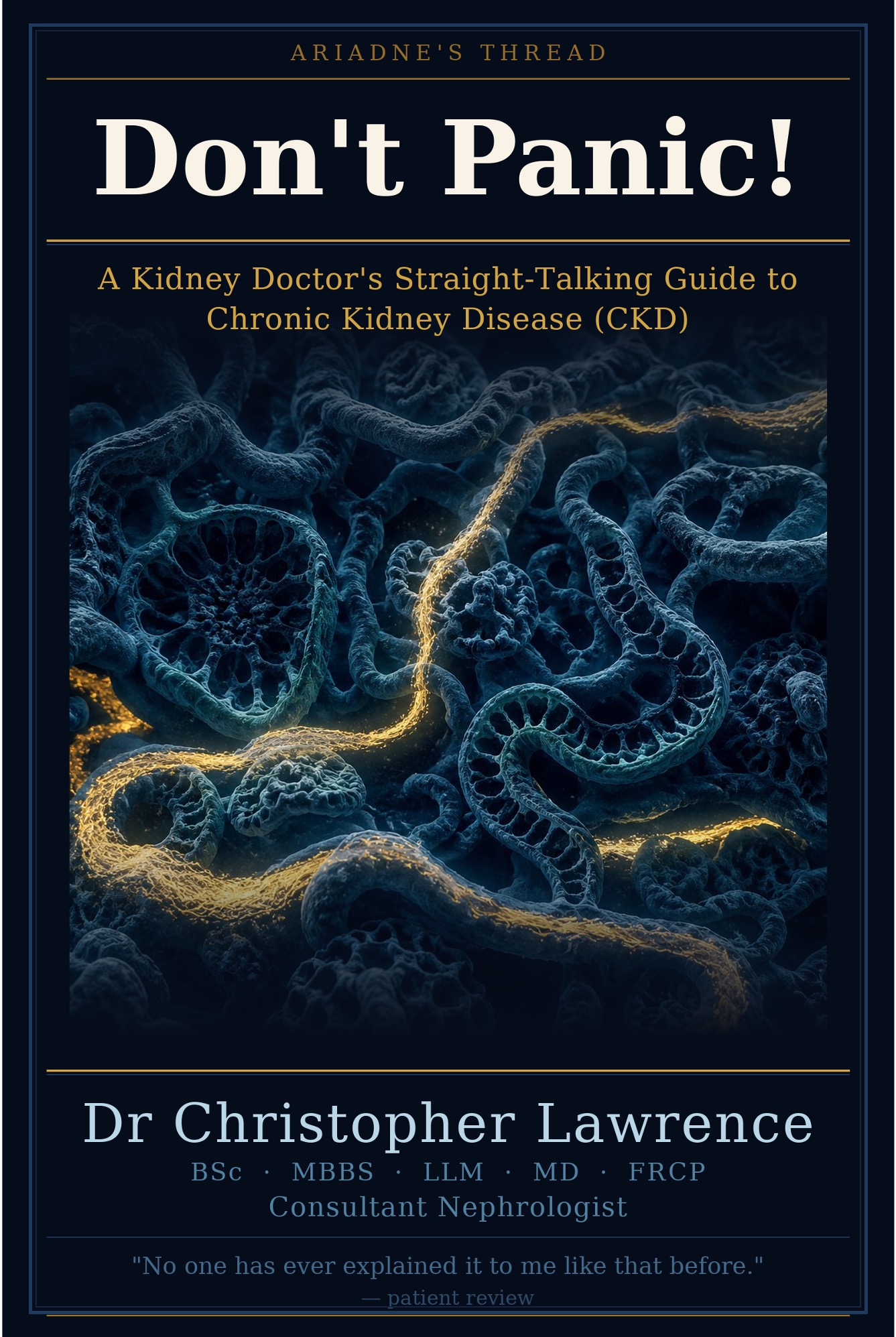
A Kidney Doctor's Straight-Talking Guide to Chronic Kidney Disease (CKD). Written from the perspective of the consulting room — the questions patients actually ask, answered clearly and without jargon.
Whether you have just been told your eGFR is low, are living with established CKD, or are supporting someone after a kidney transplant, this book gives you the knowledge to understand what is happening, ask better questions, and face your diagnosis with confidence rather than fear.
"No one has ever explained it to me like that before." — patient review
Coming soon on Amazon"My father has been seen by Dr Christopher, and I'm here to express my total appreciation regarding this consultation. It was extraordinary — I am very pleased that the universe made me call this extraordinary doctor when I was researching for a kidney specialist."
"I cannot praise Dr Lawrence too highly. He saw me within 24 hours of making an appointment. Carefully listened to what I had to say, gave me a thorough physical examination, analysed a specimen and provided an interim solution which kept me out of hospital."
"Dr Lawrence has been monitoring my husband's condition daily. The type of input from a doctor is in my experience extremely rare — but Dr Lawrence makes the time to ensure my husband feels supported and listened to. His extensive knowledge and personally engaging manner means he's easy to talk to."
"I don't recall seeing another doctor who has been so willing and able to explain symptoms, diagnosis and planned treatment in a way in which the patient can understand."
Dr Lawrence has presented research at national and international conferences including the American Society of Nephrology and the American Transplant Congress, and co-supervised PhD research at the University of Hertfordshire.
In transplant patients with antibody-mediated rejection (AMR), elevated donor-derived cell-free DNA (dd-cfDNA) was detected in the blood even when conventional donor-specific antibody (DSA) testing was negative. This establishes cfDNA as an independent biomarker of rejection — capable of detecting graft injury that serological testing alone would miss.
Pre-transplant adherence behaviour during haemodialysis does not reliably predict whether a patient will adhere to immunosuppression after transplantation. This challenges the common clinical assumption that dialysis adherence can be used as a proxy marker when selecting transplant candidates.
Published in the New England Journal of Medicine, this correspondence contributed to establishing the clinical significance of complement-binding (C1q-fixing) anti-HLA donor-specific antibodies in kidney transplantation — a functionally distinct subclass of DSA associated with significantly worse transplant outcomes and antibody-mediated rejection.
Even low-level pre-existing donor-specific antibodies can accurately predict early antibody-mediated rejection — but only when those antibodies are capable of activating complement. The functional quality of DSA (its ability to fix complement) matters as much as its quantity, with important implications for pre-transplant risk stratification and immunological workup.
In this multicentre randomised controlled trial — the first of its kind in de novo minimal change disease — tacrolimus monotherapy achieved remission rates equivalent to prednisolone monotherapy, while avoiding the significant metabolic and systemic side effects associated with long-term steroid use. This supports tacrolimus as a first-line alternative in patients for whom steroids are poorly tolerated or contraindicated.
Published in the BMJ, this landmark cohort study examined which factors predict survival and morbidity in patients on chronic dialysis. The findings provided an evidence base for clinical decision-making around dialysis initiation, contributing to the ethical and practical framework for rationing decisions — a question that remains clinically and politically important today.
Book online via Doctify, or contact the secretary directly.